
Four Monroe County Criminal Record Counters
A single Monroe County event can leave records at four distinct places. The arresting police agency keeps its incident report. A Magisterial District Court opens the complaint-level docket and records bail or the preliminary hearing. If the case is held for court, the District Attorney files an Information and the Clerk of Courts maintains the Court of Common Pleas file. A commitment to county custody creates a separate intake record at the Monroe County Correctional Facility. None of these offices is a universal criminal history desk.
The Monroe County court system is centered at 610 Monroe Street, while the District Attorney, Public Defender and Pretrial Services use offices at 701 Main Street. Jail records sit at 4250 Manor Drive. This split is why asking for “the criminal record” can send a request to the wrong custodian. The 43rd Judicial District’s Court Administration page confirms the courthouse route and public counter details.
The official Monroe County court page provides a useful view of that local access point.
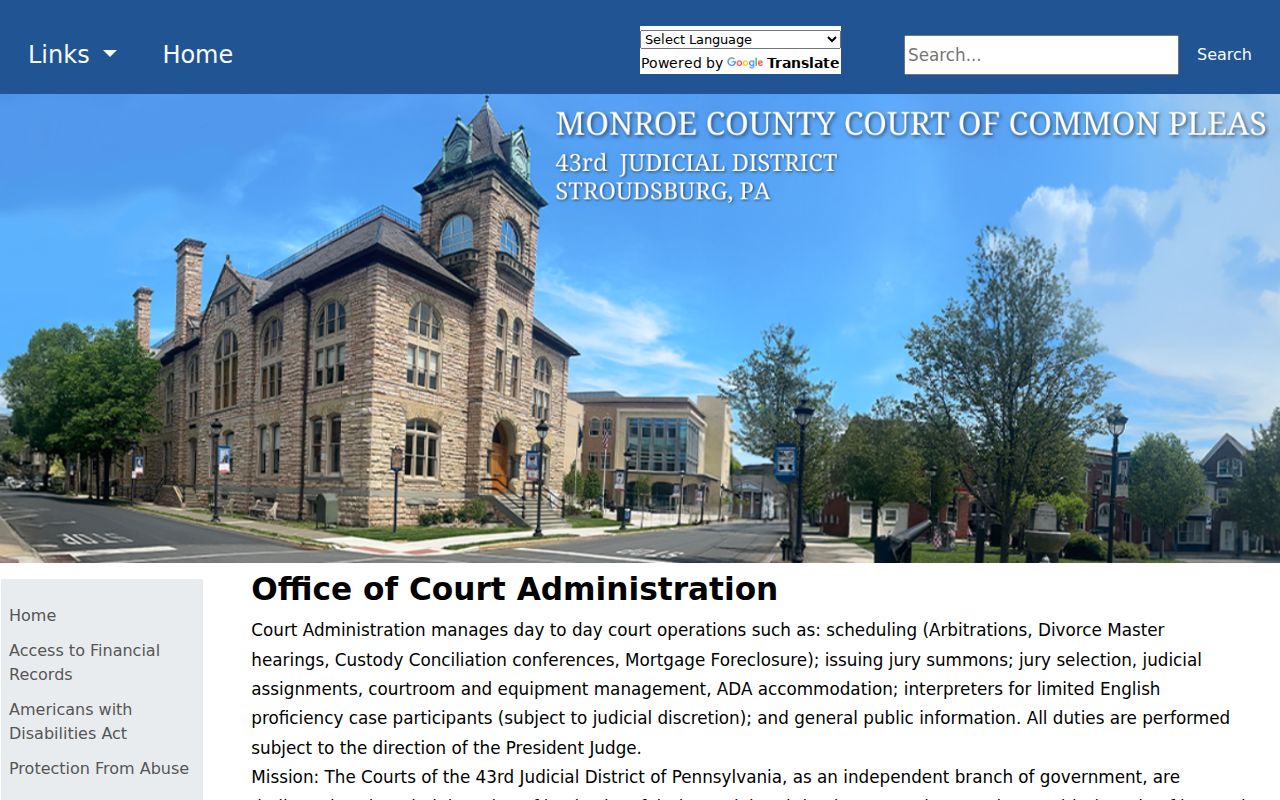
Its contact information helps separate Common Pleas business from police, jail and state repository requests.
How to Check Criminal History in Monroe County
Begin with the record product that best fits the question. A person trying to understand a filed Monroe County case should start with Pennsylvania’s Unified Judicial System search. Someone reviewing a formal statewide repository result should use PATCH. A very recent incident may require the arresting agency and the Monroe County facility because data entry, charging and fingerprint matching do not happen at the same time.
Gather the full legal name, date of birth, likely filing year and any docket, OTN, complaint or incident number. Name spelling and date of birth help separate people with similar names. Then follow the event through each official layer:
- Search UJS, choose Monroe County and check both Magisterial District and Common Pleas results.
- Match the person with a date of birth or exact identifier when a public field permits it.
- Read each charge, grade, status, bail event and disposition rather than relying on the case caption.
- Call the Clerk of Courts at 570-517-3385 for older, certified or non-imaged court papers.
- Contact the arresting agency for its report and the correctional facility for current Monroe County custody.
- Order PATCH when a formal Pennsylvania repository response is the needed product.
Note: A blank search is not proof that no event occurred because sealed, limited-access, delayed and destroyed records may not appear.
Search Monroe County Criminal Records in UJS
The Unified Judicial System Case Search is free and needs no public account. Set the county to Monroe and choose the court level. The early complaint and preliminary hearing usually appear on an MJ docket. A case sent onward appears as a CP docket in the 43rd Judicial District, often in a format such as CP-45-CR followed by its sequence and year. The “45” is Monroe County’s code, not an offense grade.
UJS offers more than a basic name box. Its advanced controls can connect a police event to court through the OTN, complaint number, incident number or arresting agency. Dates and status help narrow a broad result set.
| Search field | Use | Monroe County tip |
|---|---|---|
| Participant and DOB | Name-based case search | Add DOB when common names create several results |
| Docket or OTN | Exact record link | Use CP and MJ identifiers as distinct court files |
| Complaint or incident | Police-to-court trail | Useful when a report number is already known |
| County and MDJ office | Local filter | Select Monroe or the correct district office |
| Status and filed dates | Result control | Check more than one year if the event crossed a calendar boundary |
| Arresting agency or ORI | Agency filter | Helps with regional police and PSP records |
Recent entries may lag, and a public docket sheet does not include every filed paper as a downloadable image. Use the Clerk counter when the online docket identifies a filing but does not supply the underlying document.
Official Pennsylvania Background Checks
The Pennsylvania State Police Central Repository operates Pennsylvania Access To Criminal History, known as PATCH. It compares submitted biographical data with Pennsylvania law-enforcement criminal-history data. It is a repository response, not a copy of every Monroe County docket and not an FBI fingerprint check. A standard request costs $22. A notarized request costs $27, while a subject-only Individual Access and Review request on form SP4-170 costs $20 by mail.
An online no-record result may arrive at once. A request placed under review can take two to four weeks. PATCH permits status checks with the control number and request date, and its help line is 1-888-783-7972 on weekdays from 8 a.m. to 4 p.m. The repository route is best when the intended task is an official Pennsylvania result or review of one’s own stored data. UJS itself warns that a docket search is not a criminal-history check.
Compare Monroe County Background Check Options
A name-based PATCH result, a personal repository review and a fingerprint-based FBI summary serve different needs. For self-review, the SP4-170 route provides the Pennsylvania subject-access product. If that result is wrong, use the OTN and the source court disposition to document the mismatch. Pennsylvania law directs an agency that detects inaccurate history data to correct it and notify the Central Repository and recipients within the set correction period.
The PATCH portal displays the state’s official name-check interface.
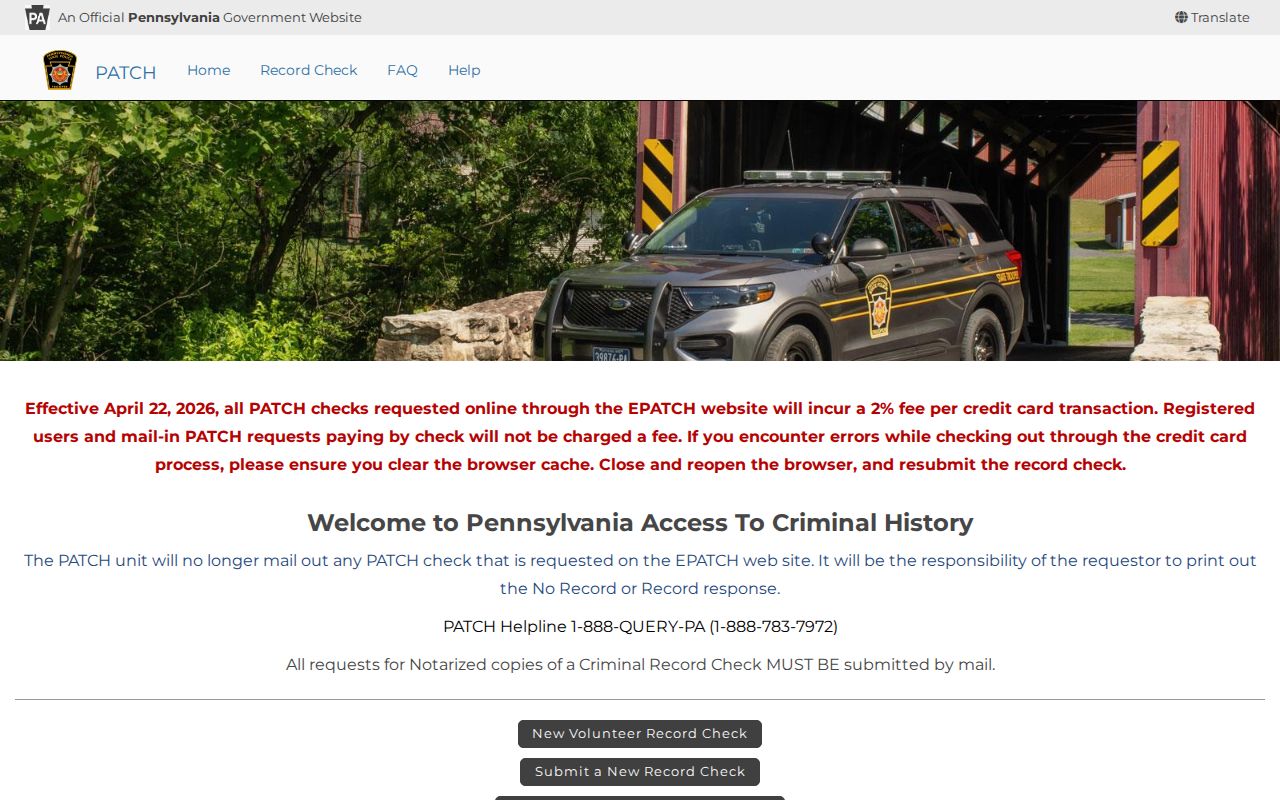
Fingerprint checks through IDEMIA/IdentoGO require a service code from the program that authorizes the check. Fees and recipients vary by program. For a personal federal Identity History Summary, the FBI route is subject-only, costs $18 and requires fingerprints submitted through the approved electronic, USPS or mailed-card process.
| Official product | Method | Published fee |
|---|---|---|
| PATCH standard | Online or SP4-164 mail request | $22 |
| PATCH notarized | Mail request | $27 |
| SP4-170 self-review | Subject-only mail request | $20 |
| FBI Identity History Summary | Subject fingerprints | $18 |
Types of Criminal Records
Monroe County criminal records are products with different owners and time frames. An incident report records the first police account and allegations. If a person enters county custody, the correctional facility creates an intake record. The MDJ file tracks the complaint, preliminary arraignment, bail and preliminary hearing. A Common Pleas file follows the formal Information, motions, plea or trial, disposition and sentence. PATCH organizes identity and arrest cycles in the state repository.
Other products answer narrower questions:
- Warrant entries: A court docket may show a bench warrant or capias, but Pennsylvania offers no complete public statewide live-warrant database.
- Custody and supervision: MCCF holds Monroe County custody data, Monroe Adult Probation supervises Monroe County cases and PA DOC covers state prisoners and parolees.
- Registry profiles: PSP publishes authorized identity, location, offense and classification fields through Pennsylvania’s Megan’s Law system.
- Restricted records: Juvenile, expunged and limited-access material is withheld from ordinary public search results.
The same event can appear differently in each file. An arrest charge may change in the District Attorney’s Information, and the final disposition may reach the repository after the court docket changes. The official county probation directory also shows why Monroe County probation and state parole must be checked through different offices.
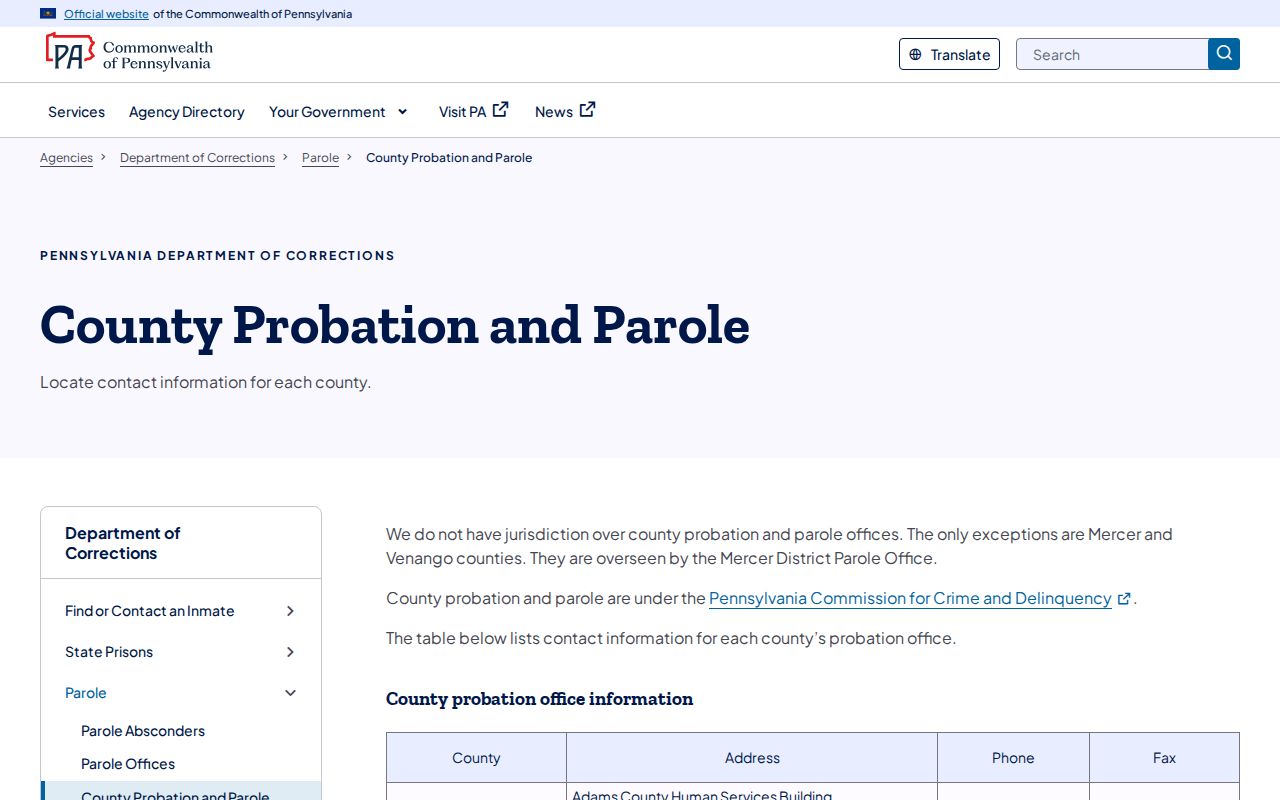
Use the sentence and violation docket to confirm the type of Monroe County supervision before contacting the county or state custodian.
Monroe County Warrant Record Gaps
The Sheriff’s online civil paper service search is not a warrant lookup. No verified public Monroe County active-warrant database exists, and Pennsylvania’s law-enforcement warrant systems are not open statewide search tools. A UJS docket can show a capias or bench-warrant event, but that entry may not reflect live service status. Sealed and juvenile matters will not appear.
For one’s own possible warrant, check the underlying docket and speak with counsel or the issuing court before appearing. Call the named MDJ for a summary or preliminary failure-to-appear matter. The Clerk of Courts handles Common Pleas records at 570-517-3385, while the Sheriff can address Sheriff-held or execution information at 570-517-3312. An originating police agency may also publish an official wanted notice. Absence from any one source does not confirm that no warrant exists.
The Monroe County Sheriff page identifies the office and its court-process role.
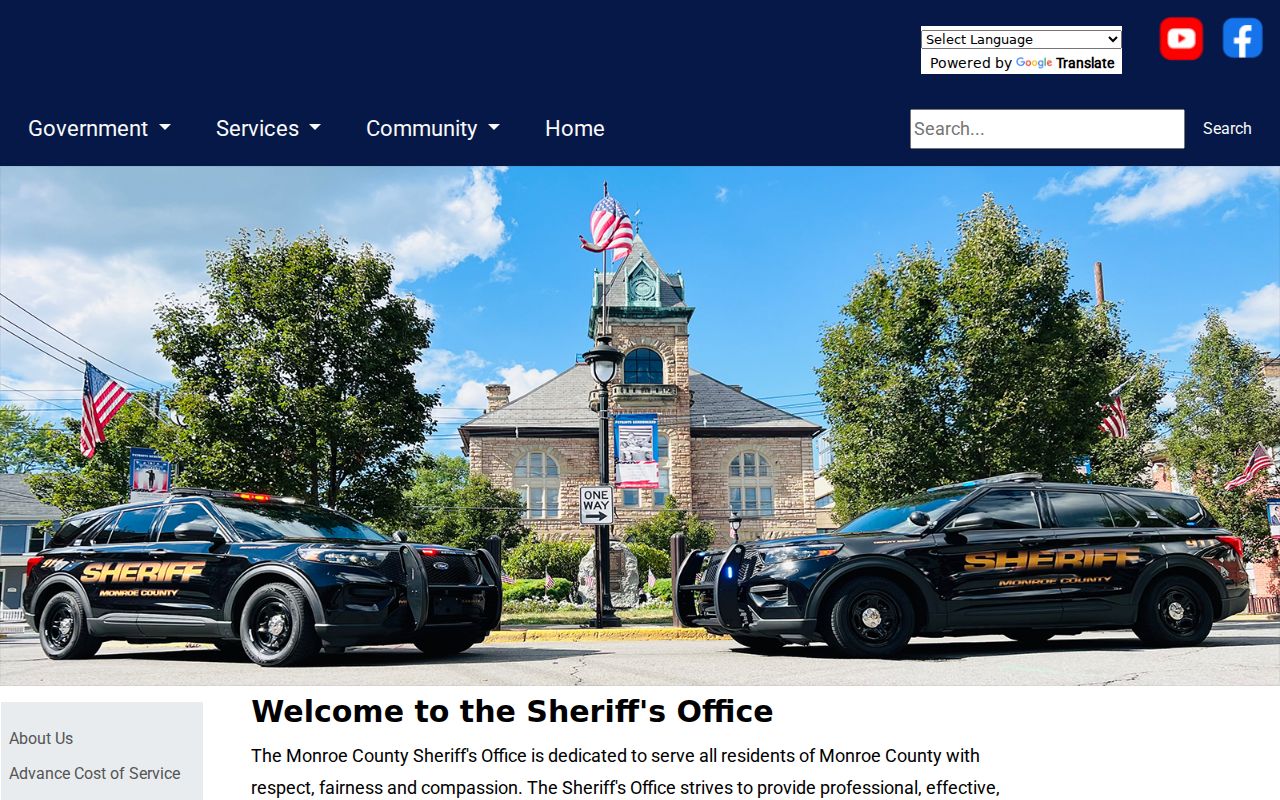
That page should not be mistaken for a Monroe County criminal-history or inmate search portal.
What a Monroe County Criminal Record Shows
The fields depend on the source. A repository rap sheet groups identity data and arrest cycles. A Monroe County court docket emphasizes the judicial case. Booking data centers on intake and custody. Public displays remove or mask Social Security numbers, financial accounts, protected medical facts, victim and minor details, and confidential documents.
| Name & Identifiers | Legal names and aliases, date of birth where public, and identifiers such as SID, OTN or docket number. |
|---|---|
| Arrest / Booking Data | Agency, incident, arrest or intake date, initial charges, holds, bail and release or transfer data when releasable. |
| Charges & Statutes | Count sequence, title and section, offense description, grade and changes from complaint through Information. |
| Disposition | Withdrawn, dismissed, nolle prosequi, acquitted, plea, verdict, ARD or another result for each count. |
| Sentence | Confinement or probation range, credit, concurrent or consecutive terms, fines, costs and restitution. |
| Custody / Supervision | Monroe County detention, state commitment, Monroe County probation or PA DOC parole status through the correct custodian. |
One case caption can contain counts with different outcomes. Read the disposition by charge. “Held for court” means the matter passed the preliminary stage, not that the person was convicted.
The Monroe County District Attorney’s office is part of this record chain because the DA’s Information may differ from the first police allegations.
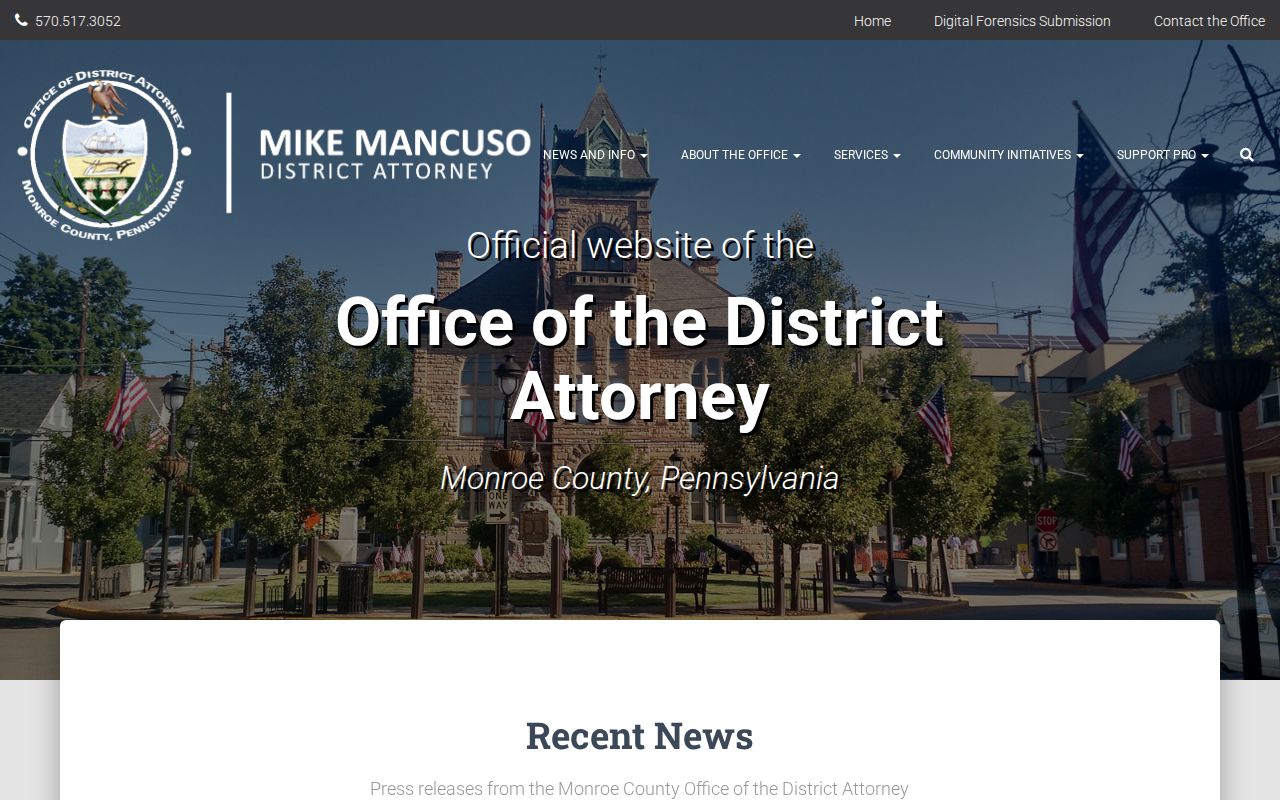
The formal Information, not a press post or booking allegation, defines the Common Pleas charge set before later amendment or disposition.
OTNs Link Monroe County Criminal Records
The Offense Tracking Number, or OTN, is one of the best keys for tracing an event. Police and fingerprint systems assign it to an arrest or charge cycle. UJS permits an OTN search, and courts report a later disposition against that link. This helps distinguish a police incident number, an MJ docket and a CP docket, which are related identifiers but not interchangeable.
Several common terms explain how the file moves:
- Complaint
- The first sworn charging document filed at the Magisterial District Court.
- Information
- The District Attorney’s formal charging document after a case is held for Common Pleas.
- Disposition
- The result recorded for a charge, such as dismissal, plea, verdict or withdrawal.
- ARD
- Accelerated Rehabilitative Disposition, a pretrial program that is not a guilty verdict and may support expungement when eligible.
- Limited access
- A restriction on public dissemination that leaves protected government access in place.
Monroe County records can fall out of sync when a disposition has not yet matched the OTN or an office has not completed data entry. Compare the source court record with a repository response before requesting a correction.
Public Access Laws
Access depends on both the custodian and the governing rule. Pennsylvania’s Right-to-Know Law applies to Commonwealth and local agency records, subject to exemptions, privilege and other laws. Judicial case records use Pennsylvania Supreme Court public-access policies instead. Criminal History Record Information Act rules control state dissemination, stale no-disposition entries and limited-access data. Those systems do not override juvenile confidentiality, investigative exemptions or victim privacy.
Key Pennsylvania rules:
Right-to-Know Law, 65 P.S. §§ 67.101 et seq. presumes agency records open unless a lawful exception applies.
18 Pa.C.S. § 9121 controls noncriminal-justice dissemination and removal of specified restricted data from public products.
UJS Case Records Public Access Policy governs court requests, public fields, redaction and confidential papers.
18 Pa.C.S. §§ 9122 through 9122.5 set expungement, petition-based limited access and Clean Slate rules.
Note: Registry data has separate lawful-use limits and may not be used to threaten, intimidate or harass a listed person.
Request Monroe County Criminal Records
When no portal provides the needed record, the Monroe County Office of Open Records is the executive-branch fallback. Requests may be made in person, by mail, email or fax using Pennsylvania’s standard state and county form. Describe an existing record with the subject, date range, event, agency and type. State whether inspection, copies or certification is sought. The law does not require an agency to answer questions or create a new list.
The Monroe County page conflicts with itself on its walk-in details. It displays Room 206 and 9 a.m. to 5 p.m. in one place, while submission directions use Room 201 and 8:30 a.m. to 4:30 p.m. at One Quaker Plaza. Call 570-215-2085 before a trip. Agencies ordinarily respond within five business days by granting, denying, partly granting, invoking an allowed extension or seeking lawful prepayment. A general OOR appeal period is usually 15 business days, while criminal-investigative appeals may route to the District Attorney.
The Monroe County Open Records page provides the request form, channels and current fee documents.
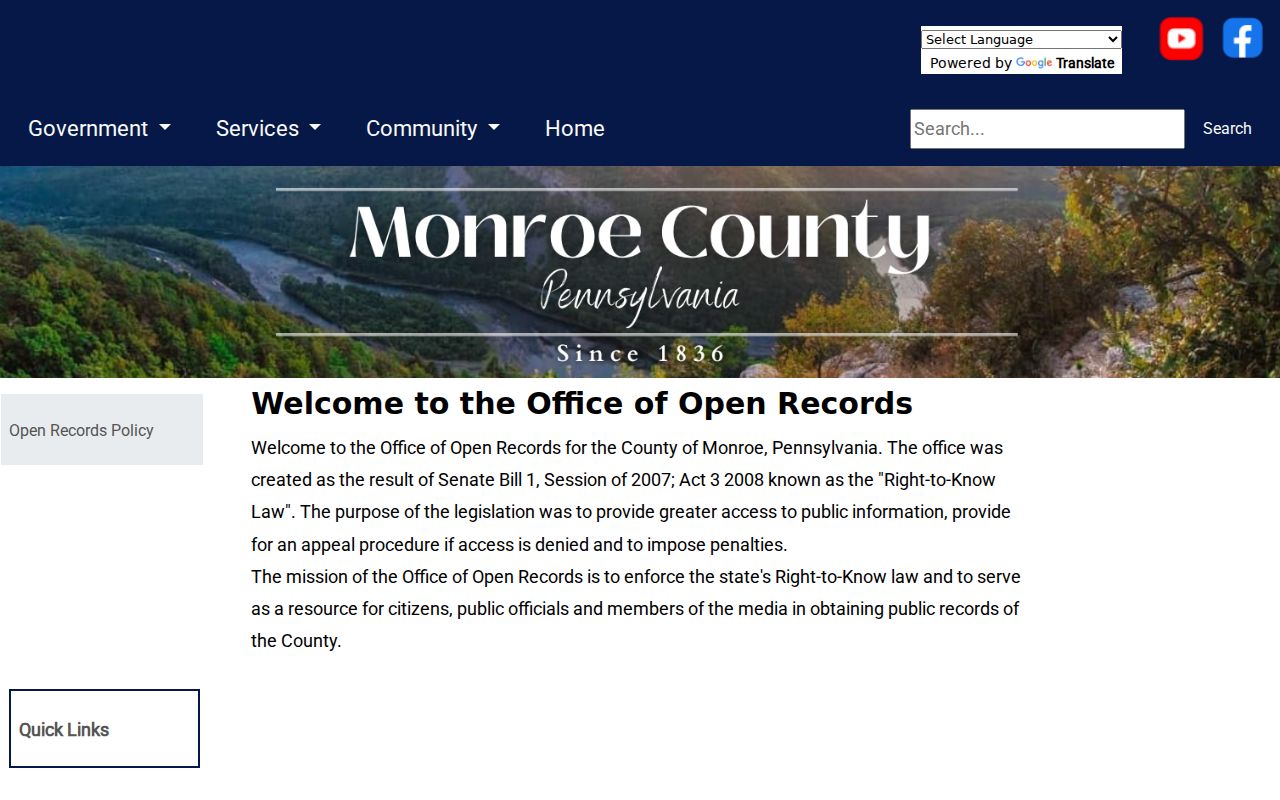
Standard black-and-white copies are generally up to $0.25 per page or side, and certification may be up to $5 per record plus copying.
Sealed, Expunged & Restricted
Juvenile, expunged and limited-access Monroe County cases do not appear in ordinary public UJS and PATCH results. Expungement can remove qualifying records from routine repositories, while limited access restricts public dissemination without destroying the record. Courts, police and designated agencies can retain protected access when the statute permits it.
Pennsylvania’s expungement statute includes routes for certain nonconvictions, eligible ARD cases and summary convictions after the required clear period. Other age and posthumous paths have their own terms. Petition-based limited access generally involves qualifying lower-level convictions, the statutory clean period and restitution conditions, subject to exclusions. Clean Slate automates limited access for specified categories.
File in the Court of Common Pleas where the case occurred and identify the correct docket. After an order, the court sends notice to the Central Repository, which in turn notifies recipient agencies. Check UJS later and use SP4-170 for a personal Pennsylvania repository review. If an old public result remains, send the signed order and identifiers to the reporting office through its correction process.
Monroe County Criminal Record Relief
An April 23, 2026 Monroe County administrative order created a distinct local access route. It permits limited appearances by Public Defender attorneys and Monroe County Bar Association Pardons and Expungement Program attorneys for expungement or limited-access petitions. The same limited role can cover access to protected records needed for pardon work. Each entry must state the caption, docket and limited purpose.
This change matters because hidden records can be needed to prepare the very petition that would restrict or remove them. It does not mean every Monroe County case qualifies, and it does not make a limited-access record public. The research did not establish a current Clerk filing fee or an official local petition packet, so confirm those points with the Clerk rather than relying on an unstated amount.
The Monroe County Public Defender page identifies the local defense office and its public contact channel. The named program connects local attorneys with Pennsylvania’s court-based expungement and limited-access process.
Criminal Records by City in Monroe County
Monroe County’s three largest incorporated places are boroughs, and none has a city municipal court. East Stroudsburg and Stroudsburg use Stroud Area Regional Police, while Mount Pocono uses Pocono Mountain Regional Police. Their incident reports stay with those regional agencies. Preliminary and summary cases run through Pennsylvania Magisterial District Courts, and bound-over criminal cases reach the county Court of Common Pleas.
East Stroudsburg Criminal History
Population 9,669 in 2020. SARPD records are kept at its Day Street regional headquarters.
Stroudsburg Criminal History
Population 5,927 in 2020. SARPD, MDJ 43-2-01 and Monroe County counters hold separate files.
Mount Pocono Criminal History
Population 3,083 in 2020. PMRPD records, MDJ files and Monroe County custody sit in three places.
Trace Monroe County Custody Records
Monroe County publishes no verified public jail roster. For current pretrial or county custody, call the Monroe County Correctional Facility at 570-597-3764. UJS may show bail or commitment events but is not a live custody list. After a state commitment, the Pennsylvania Department of Corrections locator can show a state prisoner or DOC-supervised parolee. It does not cover the county jail. Federal custody belongs to the Bureau of Prisons locator.
The PA DOC Inmate/Parolee Locator explains the state search and its coverage.
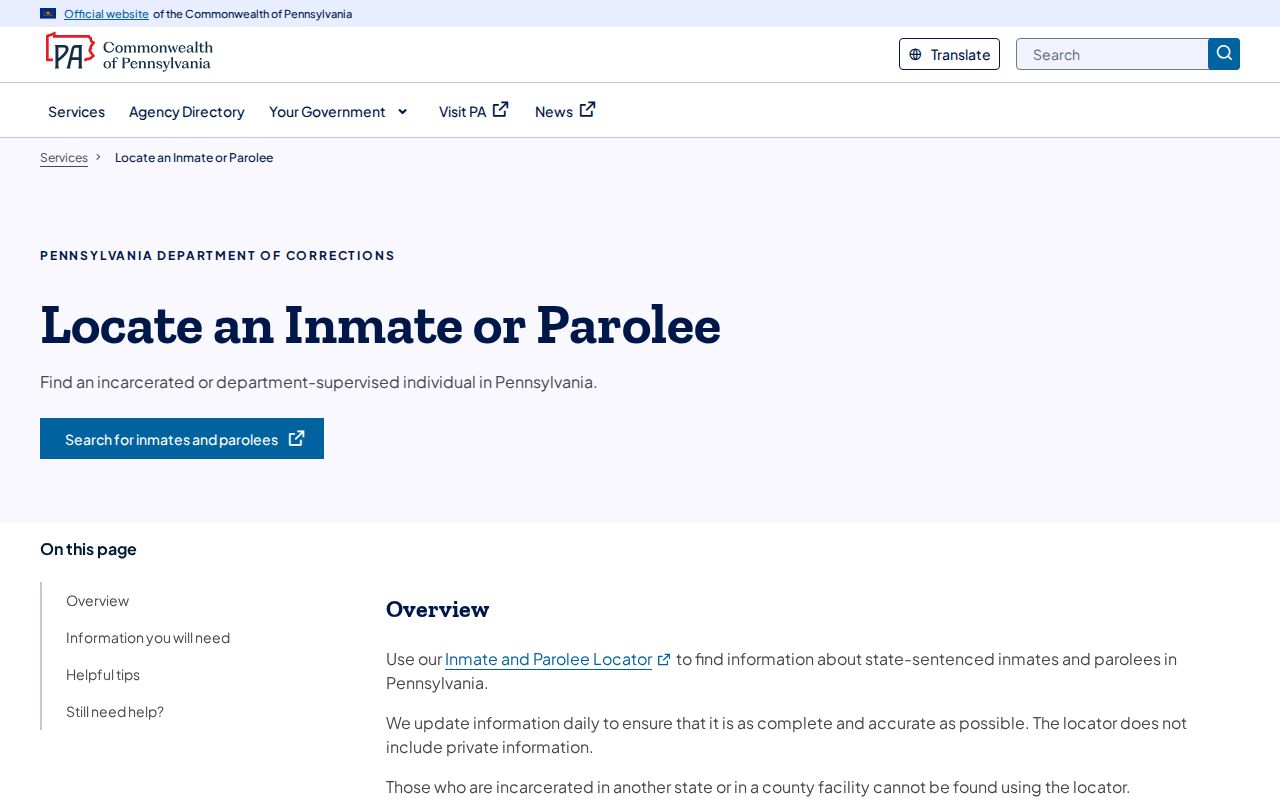
Search by last name or inmate number, with first name as a useful aid, and remember that the state listing is updated daily rather than in real time.
Monroe County probation and state parole remain separate. Monroe Adult Probation supervises county cases, while the Pennsylvania Parole Board makes state release decisions and PA DOC handles field supervision.